
Shipping Insurance for High-Value Items: The 2026 Comprehensive Guide
Updated: Jul 2
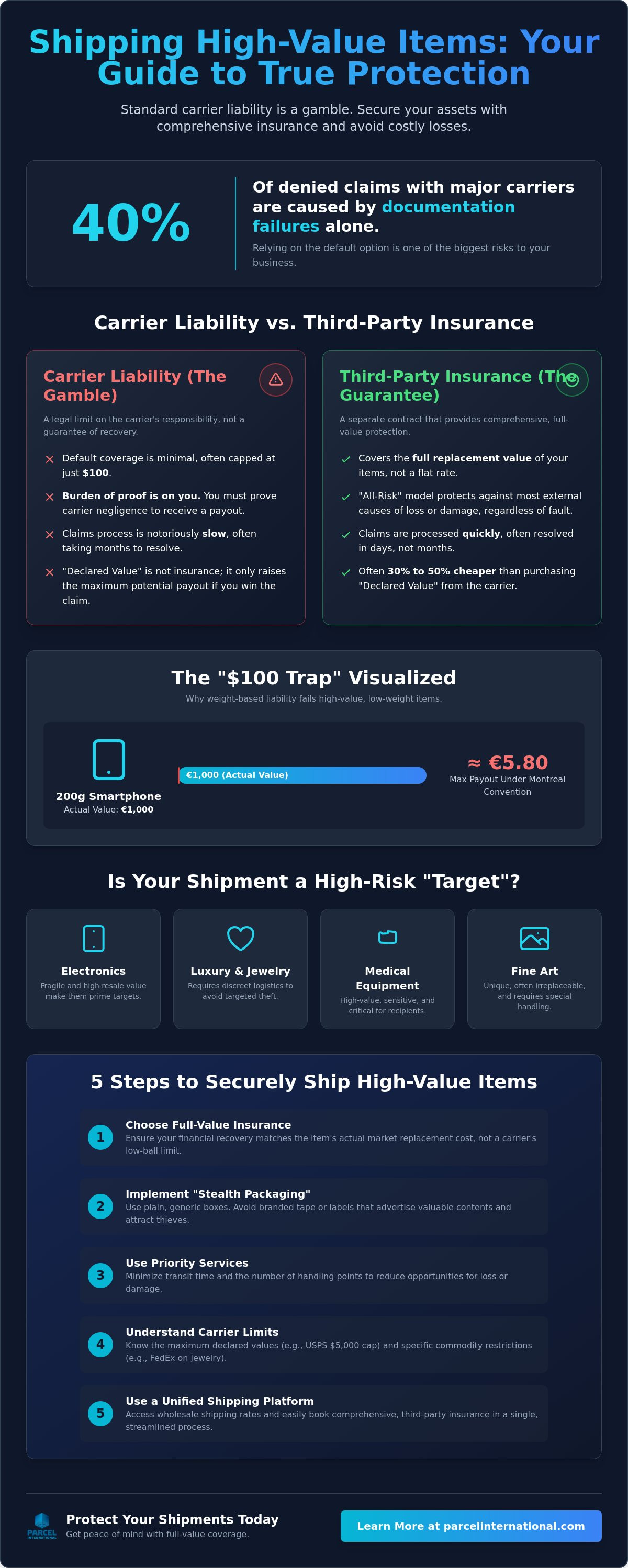
Did you know that approximately 40% of denied claims with major carriers like UPS are caused by documentation failures alone? It's a staggering figure that highlights a harsh reality: relying on standard carrier liability isn't a strategy; it's a gamble. If you're moving assets worth thousands of dollars, you've likely felt the frustration of high premiums eating into your margins or the confusion of trying to decipher fine print. You deserve a solution that offers more than just a "declared value" sticker. This guide to shipping insurance for high value items will help you move beyond the legal minimums to achieve full-value peace of mind.
We'll show you exactly how to protect your most valuable assets while avoiding the common traps that lead to denied claims. You'll gain a clear understanding of 2026 carrier limits, such as the $5,000 cap on most USPS services or the specific jewelry restrictions at FedEx. We'll also explain why third-party insurance is often 30% to 50% cheaper than carrier options. By the end of this article, you'll have a streamlined way to book insured shipments that guarantee financial recovery if a package is lost or damaged.
Table of Contents
Shipping Insurance vs. Carrier Liability: What You Must Know
Understanding the difference between carrier liability and a dedicated insurance policy is the first step toward securing your bottom line. Many shippers assume that "declared value" is synonymous with protection, but this is a costly misconception. Carrier liability is a legal limit on a carrier's financial responsibility for your goods. It is a minimum standard, not a guarantee of recovery. In contrast, Shipping insurance is a separate contract that provides coverage for the full replacement value of your items, regardless of who is at fault for the loss or damage.
The primary barrier to recovery with carrier liability is the "burden of proof." When you rely on a carrier's standard $100 limit, you must prove that the carrier was directly responsible for the damage. This often requires exhaustive documentation and evidence of negligence. Choosing the right shipping insurance for high value items removes this hurdle. Most insurance policies pay out based on the fact that the loss occurred, sparing you the legal battle of proving fault. When you use "Declared Value" on a shipping label, you aren't buying insurance; you're simply paying to raise the maximum amount the carrier might pay you if you can prove they were negligent.
The $100 Trap: Why Standard Liability Fails High-Value Items
Standard carrier liability is rooted in international treaties like the Warsaw and Montreal Conventions. These agreements were designed to protect carriers, not shippers. For international air shipments, the Montreal Convention limits liability to approximately €26.97 per kilogram as of February 2026. This weight-based compensation is devastating for high-value, low-weight items. If you ship a 200-gram smartphone worth €1,000, the maximum payout under these rules is only about €5.80. The gap between your actual cost and the carrier's payout can be thousands of dollars, leaving your business to absorb the loss.
How Third-Party Shipping Insurance Works
Dedicated shipping insurance for high value items typically operates on an "All-Risk" model. While carrier liability often only covers "named perils" or specific types of carrier error, All-Risk coverage protects against almost any physical loss or damage from external causes. This includes theft, transit accidents, and even certain types of handling damage that carriers might otherwise deny. Because insurance providers specialize in risk, they process claims much faster than carrier legal departments. You can often resolve a claim in days rather than months. It's also important to remember that standard international shipping rates frequently exclude high-level protection by default, making it your responsibility to add full-value coverage at the point of booking.
Evaluating Your Risk: What Qualifies as High-Value?
High-value is a relative term that depends entirely on your business's cash flow and risk tolerance. While a carrier might view any item exceeding their $100 liability as "high-value," your internal threshold is likely different. If the loss of a single package would disrupt your operations or damage a critical client relationship, that shipment requires professional shipping insurance for high value items. You must move beyond the basic liability mindset and seek Full Value Protection. This ensures your financial recovery matches the actual market replacement cost rather than a depreciated or weight-based estimate.
Risk assessment also involves understanding the "Target Interest" list. This is an industry-standard categorization of goods most prone to theft during transit. High-resale items like designer handbags, pharmaceuticals, and consumer electronics are prime targets for intercepted deliveries or "porch piracy." Shipping these items requires more than just a standard label; it demands a strategic approach to logistics that prioritizes anonymity and speed. If you are uncertain about your current risk level, you can consult with a logistics specialist to audit your shipping lanes.
Common High-Value Shipping Categories
Electronics and High-Tech: These items are both fragile and highly liquid on the secondary market. A single drop can shatter a sensor or crack a motherboard, often without showing visible damage on the exterior box.
Luxury Fashion and Jewelry: High-end apparel and watches require discreet logistics. Using branded tape or "luxury" keywords on a customs form is an invitation for theft.
Original Prototypes and Documents: While the physical paper or plastic might have low material value, the intellectual property is priceless. These items are difficult to insure for their true worth, making secure, tracked transit even more vital.
Assessing Transit Risks for Global Delivery
The complexity of international parcel shipping introduces multiple touchpoints where a package can be mishandled. Every time a shipment moves from a truck to a sorting facility or an aircraft, the risk of damage increases. Environmental factors are also a concern in air freight; rapid shifts in temperature and atmospheric pressure can affect sensitive medical equipment or fine art. In 2026, emerging markets also present unique political and customs risks. Sudden regulatory changes can lead to prolonged seizures at the border, making robust insurance coverage a necessity for maintaining your supply chain's resilience.
Comparing Insurance Limits Across Major Carriers
Every major carrier operates with a standard liability limit, usually capped at $100. While this covers basic documents or low-value parcels, it's insufficient for high-stakes commerce. If you're moving assets worth thousands of dollars, securing the right shipping insurance for high value items means understanding the hard caps set by each provider. UPS, for example, allows a maximum declared value of $50,000 for most domestic shipments, though this can rise to $70,000 with specific account approvals. FedEx Express mirrors that $50,000 ceiling, but their Ground service is strictly capped at $2,000. This official government guide clarifies how these carrier valuation limits differ from true insurance, a distinction that often determines whether you recover your full investment or just a fraction of it.
The complexity increases when you move from air to land. Calculating international road freight rates Europe requires knowledge of the CMR convention, which limits liability based on the weight of the shipment rather than its market value. This creates a massive risk for lightweight, expensive goods. You must also account for item-specific exclusions. Most carriers won't protect loose stones, precious metals, or certain antiques under standard contracts. If your inventory falls into these categories, relying on a carrier's "declared value" is often a dead end. You need a policy that specifically names these high-risk items to ensure you aren't paying for protection that doesn't actually exist.
Carrier-Specific High-Value Programs
Specialized programs like UPS Parcel Pro or FedEx Declared Value Advantage are designed for high-frequency shippers of luxury goods. These programs offer higher limits, sometimes exceeding $100,000, but they aren't accessible to everyone. You generally need a high-volume account and a proven track record of secure packaging to qualify. DHL Express also implements high-value security protocols, using a closed-loop network to minimize touchpoints and reduce the risk of internal theft or loss during sorting.
Hidden Exclusions in Carrier Contracts
Carrier contracts are filled with clauses that can invalidate a claim. The "Acts of God" provision allows carriers to deny responsibility for losses caused by natural disasters or extreme weather. Perhaps more importantly, carriers almost never cover "Indirect Loss," such as lost profits or business disruption caused by a missing package. Compliance is also a major hurdle. You must ensure you have the correct international shipping customs documentation, as missing or inaccurate forms are one of the most common reasons insurance claims for high value items are denied in 2026.
5 Steps to Securely Ship High-Value Items
Securing a shipment involves more than just purchasing a policy. While shipping insurance for high value items provides a financial safety net, your packaging and logistics strategy acts as the first line of defense. Follow these five steps to minimize risk before your package even leaves the warehouse. Every touchpoint is a potential point of failure; reducing them is your primary goal.
First, always select an Express service level. Standard or economy shipping often involves high-volume hubs where packages sit for longer periods. Express shipping moves your goods through a prioritized, faster network with fewer touchpoints. Second, implement "Stealth Packaging." Never use boxes that display brand names or high-value logos. If you're shipping electronics, a plain brown box is far more secure than one that advertises a premium brand. Third, use the double-box method. Place your item in an inner box with adequate padding, then place that box inside a larger, second container with at least two inches of cushioning on all sides.
Fourth, require an Adult Signature Restricted Delivery. This prevents the carrier from leaving a package on a doorstep or with a neighbor, ensuring it reaches the intended recipient directly. Finally, document everything. High-resolution photos of the item and the final sealed package are vital if you ever need to file a claim. To ensure your shipments are handled by top-tier carriers with the highest security standards, book your next high-value shipment here.
Packaging and Labeling for Maximum Security
Avoid using brand-name tape or recognizable box shapes that might tip off handlers to the contents. Instead, use reinforced, tamper-evident seals and record the seal numbers in your shipping logs. When applying the tracking label, ensure it sits on a flat, unobstructed surface. This prevents scan errors that could lead to your package being manually handled or set aside in a high-traffic area. These small adjustments create a significant barrier against opportunistic theft.
Preparing for the Worst: Documentation for Claims
Capture time-stamped photos of the item's condition before it enters the box and a final shot of the sealed container on the scale. Keep digital copies of original invoices or professional appraisals to prove the item's worth. The Commercial Invoice must match the insured value exactly to prevent customs delays or claim denials during the audit process. Having this documentation ready allows for a transparent and efficient recovery if the unexpected occurs. Don't wait for a loss to happen before gathering your records.
Why Parcel International is the Smart Choice for High-Value Goods
Managing global logistics shouldn't feel like a high-stakes gamble. While you now understand the nuances of carrier limits and the necessity of stealth packaging, securing shipping insurance for high value items shouldn't be a fragmented process. Parcel International serves as your stable intermediary, replacing chaotic, multi-platform workflows with a single, unified solution. We provide direct access to wholesale rates from top-tier carriers like DHL, UPS, and FedEx, ensuring your premium shipments move through the most reliable networks in the world without the typical corporate friction.
Our platform eliminates the anxiety of hidden costs by allowing you to add shipping insurance for high value items directly at the point of booking. You don't have to deal with separate insurers or complex third-party contracts. Instead, you get a transparent view of your total costs upfront. If the unexpected happens, you aren't left to navigate carrier legal departments alone. Our expert support team takes over the claims process, handling the difficult negotiations with carriers to ensure you receive the financial recovery you were promised. We also provide automated customs tools that check your documentation against 2026 regulations, preventing your goods from being flagged or delayed at the border.
The Power of Choice: Comparing Rates and Insurance
Efficiency is about having the right data at the right time. Our platform allows you to compare total landed costs, which includes both the shipping rate and the insurance premium, in a single view. For businesses moving larger volumes, the benefits of working with a freight forwarder become clear when consolidating high-value shipments into more secure, monitored lanes. This scalability is vital for e-commerce brands growing globally. You can move from shipping individual luxury items to managing complex, international inventory distributions without changing your workflow or sacrificing protection.
Reliability and Transparency
We believe in radical transparency. There are no hidden fees, no restrictive volume minimums, and no complex subscription requirements to access our best rates. You get the same professional-grade tools whether you ship once a month or a hundred times a day. If you ever have a question about a high-stakes delivery, you have direct access to our Rotterdam-based support team. We value your peace of mind over corporate jargon, providing clear, action-oriented advice when you need it most. Stop guessing about your coverage and start shipping with confidence. Get a quote for your high-value shipment today.
Secure Your Global Growth with Total Transit Security
Securing the right shipping insurance for high value items doesn't have to be a fragmented or expensive process. Parcel International provides the stable bridge you need, offering expert logistics support backed by industry experience since 2007. Our strategic partnerships with DHL, FedEx, and UPS give you direct access to the world's most reliable networks, while our automated customs tools ensure your shipments move without procedural friction. Ship your high-value items with confidence at Parcel International. You've worked hard to build your business; let us help you protect every shipment as you scale globally.
Frequently Asked Questions
What is the difference between declared value and shipping insurance?
Declared value is an increase in the carrier's financial liability rather than a true insurance policy. While it raises the potential payout, you still bear the burden of proving the carrier was negligent or at fault for the damage. Shipping insurance is a separate contract providing all-risk coverage for the full replacement cost. It pays out based on the fact of the loss itself, sparing you the legal battle of proving carrier negligence.
How much does shipping insurance for high-value items typically cost?
Third-party shipping insurance for high value items is typically 30% to 50% more cost-effective than the "declared value" fees charged by major carriers. For a $1,000 shipment, third-party insurance might cost between $5 and $10, compared to $12 to $20 from a standard carrier. These rates are based on the total value of the goods and the specific risks associated with the destination and shipping lane.
Can I insure jewelry or watches for international shipping?
You can insure jewelry and watches, but standard carrier limits are often extremely restrictive. FedEx, for instance, limits items like jewelry and watches to a maximum value of $1,000 regardless of the service level. To protect these assets, you should use specialized high-value programs or third-party policies that specifically name these categories. Standard contracts often exclude loose stones or precious metals by default.
What should I do if my high-value package arrives damaged?
Immediately document the damage with high-resolution photos of the item and all original packaging. Don't discard the box or cushioning; carriers will require an inspection to verify the damage occurred during transit. Notify your insurance provider or the carrier within 24 hours to initiate the claim. Delays in reporting or disposing of packaging materials are the most common reasons for claim denials in the industry.
Are there items that cannot be insured for shipping?
Certain items are universally excluded from standard insurance policies, including cash, coins, and hazardous materials. Perishable goods and live animals also require specialized cargo insurance rather than standard parcel coverage. Additionally, many insurers will deny coverage for "extraordinarily fragile" items like antiques or fine art unless they are packed by a professional third-party service and documented with a certificate of professional packaging.
Does shipping insurance cover the cost of shipping itself?
Most policies allow you to include the cost of the freight in the total insured value. When you book your shipment, you should calculate the "total landed cost," which includes the item's purchase price and the shipping fees. If the package is lost, a comprehensive policy will reimburse you for both the value of the goods and the money you spent on the transit service. This ensures you aren't out of pocket for the shipping costs.
How long does it take to get paid for a shipping insurance claim?
Claim processing times vary significantly between providers. Major carriers often take 30 to 60 days to complete an investigation and issue a payout. Dedicated third-party insurance providers typically resolve claims much faster, often within 7 to 10 business days. This speed is a primary reason why high-volume businesses prefer specialized insurance platforms over standard carrier liability for their most expensive assets.
Do I need to show proof of value when buying insurance?
You don't usually need to provide proof of value at the moment you purchase insurance. However, you must have this documentation ready if you need to file a claim. Keep original sales invoices, bank statements, or certified appraisals readily available. If the value you insured doesn't match the documentation provided during a claim, the payout will be limited to the lower of the two amounts to prevent fraud.


